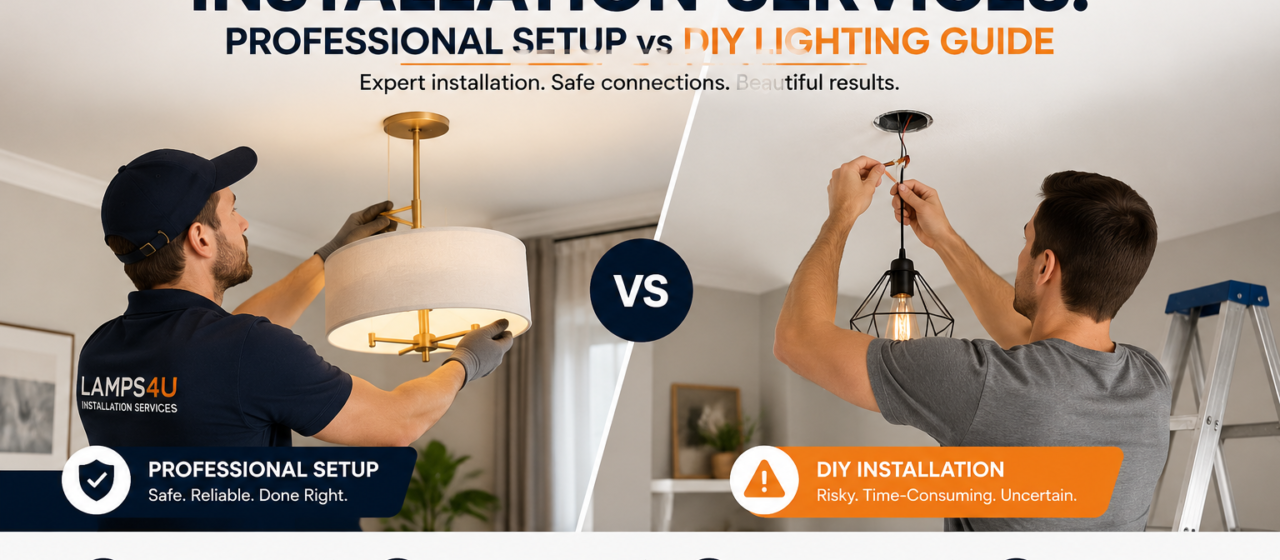
When you’re ready to upgrade your home’s lighting, lamps4u offers both products and installation services that can transform any space. Whether you choose lamps4u’s professional installation team or tackle the project yourself, understanding your options helps you make the right decision for your needs and budget.
Installing new lighting fixtures isn’t always straightforward. Some projects take an afternoon with basic tools, while others require electrical expertise and permits. This guide breaks down when you should hire professionals and when you can confidently go the DIY route.
Understanding Lamps4u’s Professional Installation Services
Lamps4u provides professional installation services across the UK that take the guesswork out of lighting setup. Their certified installers handle everything from simple pendant light replacements to complex ceiling fixture installations. They can also manage rewiring projects, smart lighting integration, and custom lighting solutions for larger spaces.
The main advantage of professional installation through lamps4u is peace of mind. Installers come trained in electrical safety codes, building regulations, and best practices. They carry insurance and guarantee their work, meaning if something goes wrong, you’re protected. They’ll also complete the job faster than most DIY attempts, typically finishing in a few hours.
Professional installation costs more upfront—usually £50 to £200 per fixture depending on complexity—but this expense can be worth it for certain situations. Homes with older wiring, high ceilings, or complicated electrical layouts benefit most from professional hands.
When to Choose Professional Installation
You should seriously consider hiring lamps4u’s professional team for these scenarios:
Complex Electrical Work
If your project involves new circuits, rewiring, or modifications to your home’s electrical panel, you need a professional. This work requires qualifications and proper permits. Attempting it yourself risks safety hazards and code violations.
Hard-to-Reach Locations
Vaulted ceilings, cathedral layouts, and other challenging spaces demand professional equipment and expertise. A trained installer has the right ladders, scaffolding, and techniques to work safely at heights.
Smart and Integrated Lighting
Modern smart lighting systems—especially those connected to home automation platforms—need proper configuration and integration. Lamps4u installers understand how to set up these systems correctly so they work with your existing smart home setup.
Building Code Compliance
New construction or major renovations often require professional installation to pass building inspections. Using lamps4u’s certified installers ensures everything meets current codes in your area.
Plasterboard and Structural Work
If installation requires cutting into walls, adding blocking between joists, or other structural modifications, professional work is essential. These tasks need structural knowledge to avoid damaging hidden wiring or support systems.
DIY Lighting Installation: What You Can Handle
Many lighting projects are genuinely manageable for confident homeowners. Simple replacements and upgrades don’t require professional skills, just basic tools and careful attention to safety.
Simple Lamp and Light Replacements
Changing out a basic ceiling light for a similar fixture is achievable DIY work. If you’re replacing like-with-like—a flush mount for a flush mount, for example—and the existing electrical box is properly installed, you can do this yourself.
Steps include:
- Turn off power at the breaker
- Remove the old fixture
- Disconnect wiring
- Install the new fixture’s mounting bracket
- Connect wires using wire nuts
- Attach the new fixture and add the cover plate
This straightforward swap typically takes 30-45 minutes and requires just a screwdriver and wire stripper.
Installing Pendant Lights on Existing Wiring
If you have an existing ceiling fixture with a working electrical box, you can often install pendant lights in its place. The electrical connection is already there—you’re just swapping the visible fixture.
Wall Sconce Installation
Adding wall sconces to existing wiring is manageable if you’re comfortable cutting a small hole in drywall and fishing wire. Many people successfully install sconces following lamps4u’s installation guides that come with fixtures.
Under-Cabinet and Accent Lighting
LED strip lights, under-cabinet lights, and puck lights are excellent DIY projects. Most plug into existing outlets or connect to battery power, requiring no electrical work whatsoever.
The DIY Approach: Tools You’ll Need
Before starting any lighting installation, gather these essentials:
- Ladder or step stool
- Screwdrivers (flathead and Phillips)
- Wire stripper and wire nuts
- Voltage tester
- Pliers
- Flashlight or headlamp
- Work gloves
A voltage tester deserves special mention. This device confirms that power is actually off before you work, preventing dangerous electrical shocks. They’re inexpensive and absolutely essential.
Common DIY Mistakes to Avoid
Improper wire connections cause most DIY lighting problems. Ensure wire nuts are tight and secure all connections firmly. Never force wires together or skip the wire nuts because you’re in a hurry.
Overloading circuits is another common issue. Adding multiple high-wattage fixtures to one circuit can trip breakers repeatedly. Check your electrical panel to understand which circuits serve which areas.
Poor fixture mounting causes lights to fall or hang at angles. Always use the correct fasteners for your ceiling type—anchors for drywall, different hardware for plaster or concrete.
Finally, cutting power to the wrong circuit means you’re working in darkness with a flashlight in your teeth. Label your breakers clearly first, or test switches to confirm you’ve found the right one.
Making Your Decision: DIY or Professional?
Ask yourself these questions:
- Does this project involve new circuits or rewiring? (Professional)
- Am I comfortable working at heights? (Personal preference—both OK)
- Does my home have old, knob-and-tube wiring? (Definitely professional)
- Is this a simple fixture replacement? (DIY-friendly)
- Do I need permits? (Professional handles this)
- Is the fixture’s weight under 50 pounds? (Usually DIY-OK)
Cost Comparison
A basic fixture swap costs you maybe £20 in supplies if you already own tools. Lamps4u professional installation for the same job runs £80-120. For more complex work, professional costs rise but so does the quality and safety guarantee.
Calculate whether your time is better spent earning money at work or installing lights. If professional installation costs less than what you’d earn in the time required, the math favors hiring someone.
Conclusion
Lamps4u installation services make sense for complex projects, high spaces, smart lighting integration, and situations requiring electrical expertise. Professional installation ensures safety, code compliance, and warranty protection.
However, DIY lighting installation works perfectly well for straightforward fixture replacements, accent lighting, and simple upgrades in existing electrical locations. With proper planning, the right tools, and careful attention to safety, you can successfully install many lighting fixtures yourself.
The best choice depends on your comfort level, the project complexity, your location, and your schedule. Both paths lead to better-lit homes—choose the one that fits your situation best.